Position: How Tos - Data Recovery - Best Hard Drive Recovery Software in 2026 (Free & Paid Tools Reviewed)

DiskGenius - A comprehensive data recovery tool designed to recover lost, deleted, or formatted data from HDDs on Windows 11/10/8/7.
ô Free DownloadTable of contents:
Losing data from a hard drive never feels small. Sometimes it is just a folder of deleted photos. Sometimes it is years of work, a client archive, or an external drive that suddenly turns RAW and refuses to open. The panic usually arrives first. The next question comes right after it: what is the best hard drive recovery software to use now?
The good news is that many cases of hard drive data loss are still software recoverable. Deleted files, formatted partitions, lost partitions, inaccessible volumes, and some RAW drive issues often fall into that category. The less cheerful part is this: not every recovery tool is built for the same job. Some are better for basic undelete tasks. Some are much stronger at partition recovery. A few are clearly made for technicians, not regular users. Others look friendly but limit actual recovery unless you pay.
That is why this guide compares ten well known hard drive recovery tools for 2026, including both free and paid options. We looked at recovery scope, ease of use, free version value, and how well each tool fits real world problems such as accidental deletion, formatting, partition loss, and deeper logical damage. For people who just want the short answer, DiskGenius stands out as the best all around choice, while CuteRecovery Free remains one of the strongest picks if you want a simpler free option.
If you want one tool that can do more than basic file undelete, DiskGenius is the one that makes the strongest case. It is not just a recovery program. It combines file recovery, partition recovery, partition management, backup, cloning, and disk utility features in the same application, which immediately makes it more useful when the problem is bigger than “I deleted a folder by mistake.”
DiskGenius is especially strong when you are dealing with formatted partitions, RAW drives, lost partitions, inaccessible volumes, or more involved situations where you want to inspect the disk health status before doing anything reckless. It also supports image based recovery workflows, which matters when the source drive is unstable and you want to work from a disk image instead of repeatedly stressing the original device. File preview support is another practical advantage. Being able to see files before recovery saves time and reduces false hope, which, frankly, is part of the whole game with data recovery.
Pros
Cons
Bottom line
Because it handles hard drive recovery like a broader storage problem, not just a file search problem. Some tools are nice when you want to recover a recently deleted item. DiskGenius is better when the drive itself is part of the story.
If you want the most complete hard drive recovery tool on this list, especially for Windows, DiskGenius is the best overall pick.
How to recover lost HDD data using DiskGenius?
If you've downloaded and installed DiskGenius on your computer, you can start hard drive recovery now. The following content shows the step-by-step guide to restore deleted/lost files from hard disk. If you need to recover data from external hard disks, see the guide: External hard drive recovery.
Step 1. Launch DiskGenius.
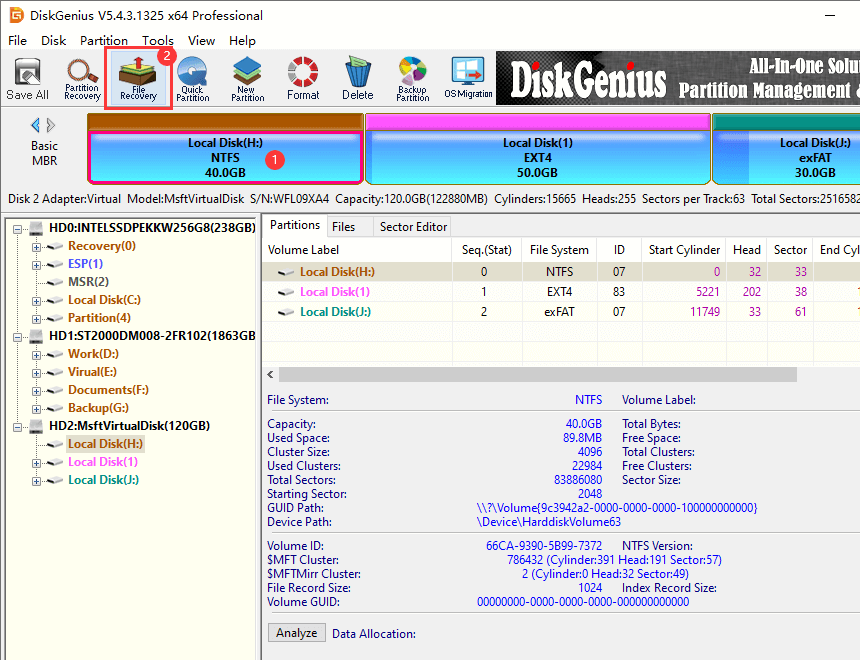
When you run DiskGenius, it automatically displays all disks and partitions that are connected to your PC. You can view detailed disk and partition information from the interface and easily locate the drive from which you want to recover data.
Step 2. Select the drive where lost files were stored and click File Recovery button from the toolbar area, as picture below:
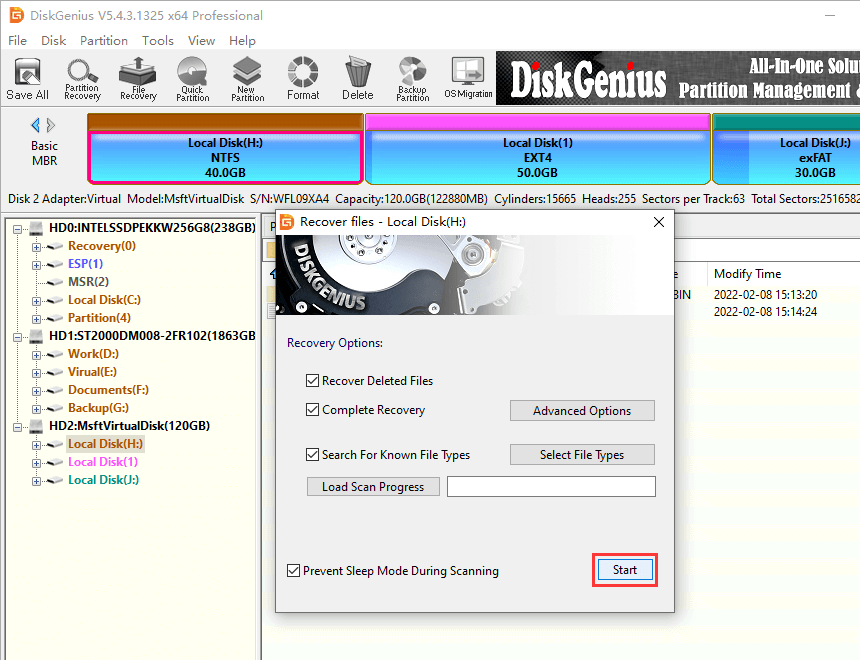
Step 3. From the pop-up window, select recovery options and click Start button.
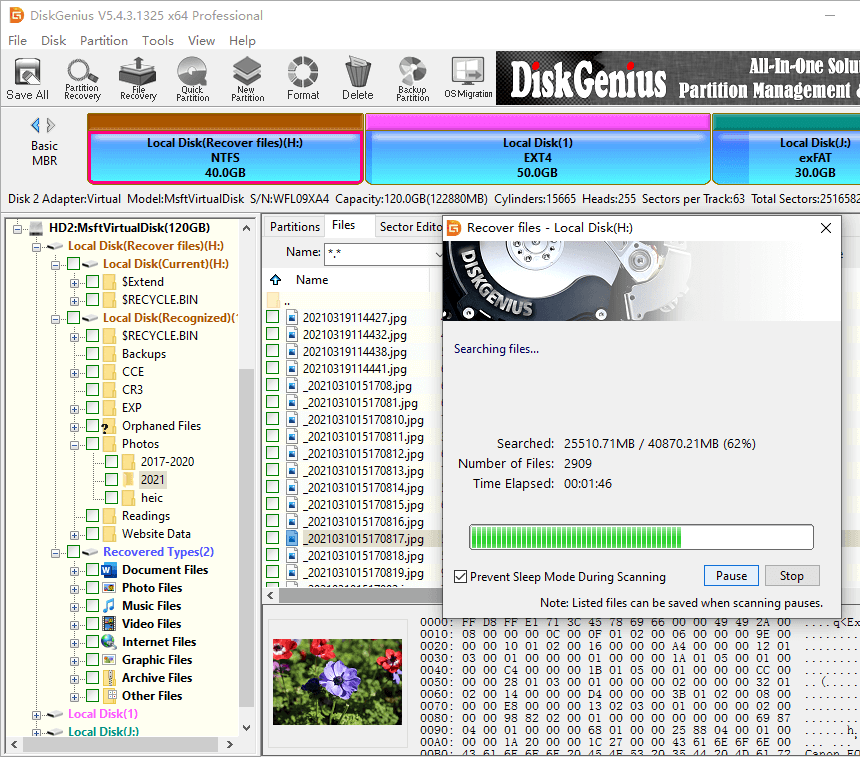
After that, DiskGenius starts to scan the selected device for lost files, as follows.
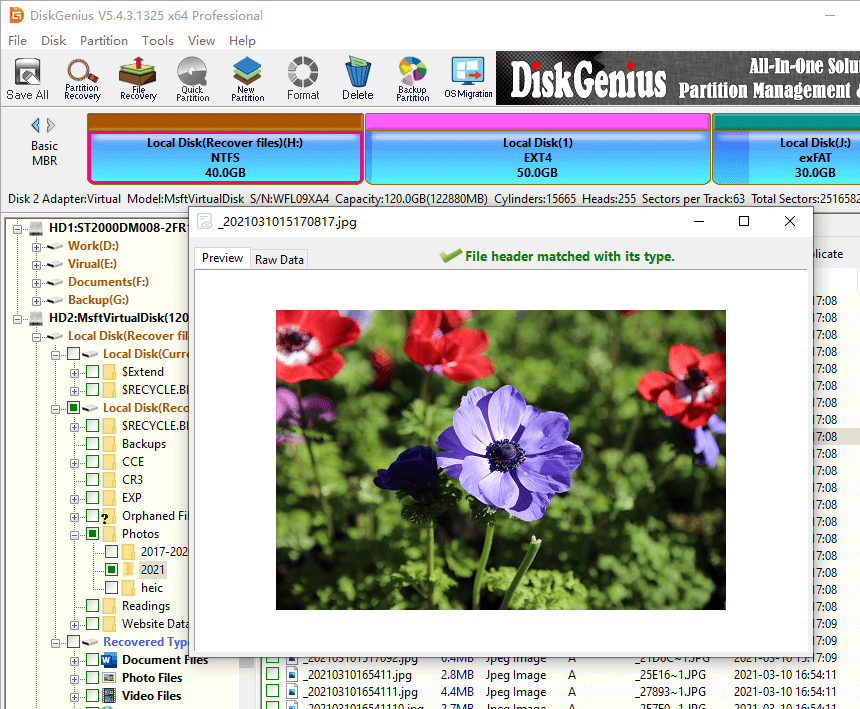
Step 4. Preview recoverable files and locate what you want to restore.
You can view the scanning result to find out files you want to restore from the hard disk. Double-click a file to open it in a pop-up window and you can see file content with original size. File preview is very helpful to check if files are correct or damaged.
File preview is also allowed during scanning. The scanning may take a while to complete if the drive being scanned has very large capacity, and yet the software displays files during scanning and keeps updating scanning the result. Thus, you can pause or stop canning and recover lost data as soon as they show up even though the scanning process is not finished.
Step 5. Recover data from your hard disk.
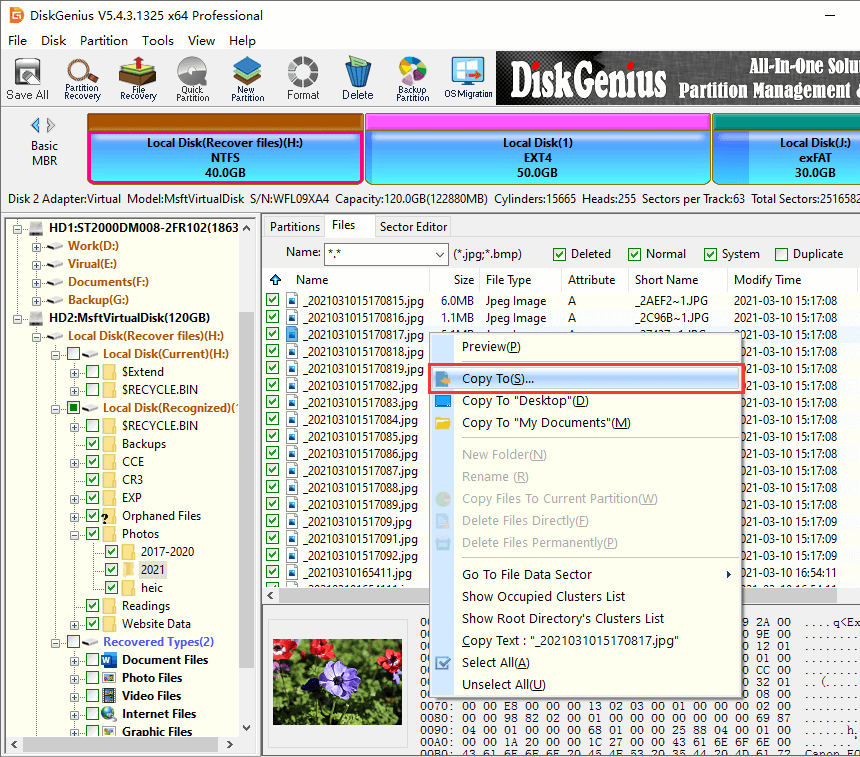
Choose files and folders you want to restore, right-click on selected data and select Copy To. Then you can choose a location to save these files and get them recovered from the disk.
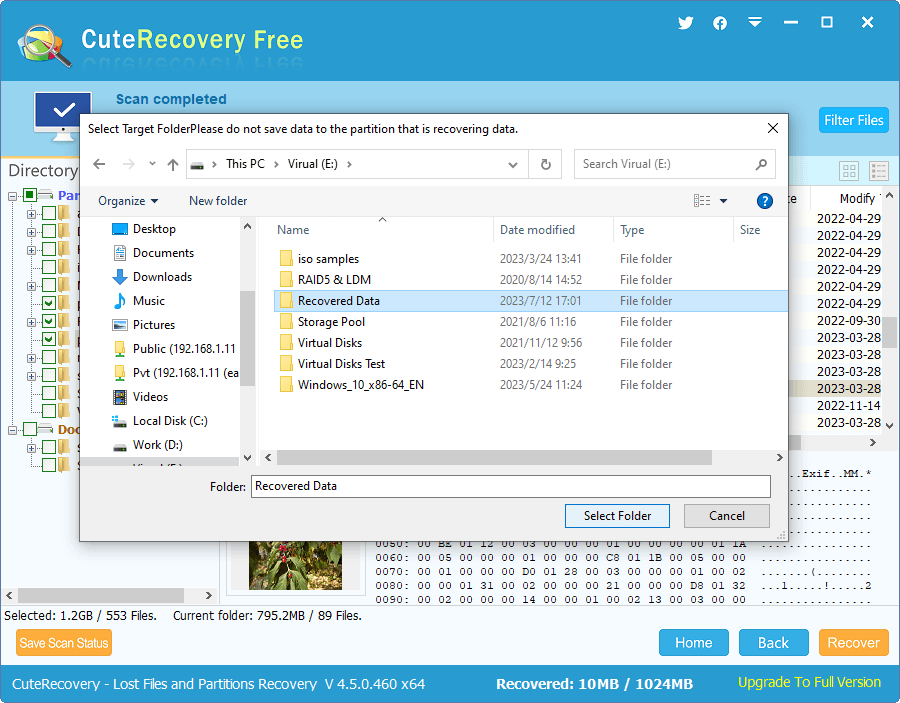
CuteRecovery Free earns its place because it does something many “free” tools do not quite manage. It feels genuinely usable for real recovery work. The software was previously known as EassosRecovery Free. It is still positioned as a free recovery tool for deleted, formatted, and lost data from hard drives and other storage devices.
This is a good choice for users who want a simpler interface and do not need a heavy set of technical extras. The appeal here is not flashy marketing. It is practicality. If someone has lost files after deletion, formatting, or a common logical issue on a hard drive, USB drive, or memory card, CuteRecovery Free gives them a straightforward path without making the whole experience feel too technical. That matters more than people think. When users are stressed, a cleaner workflow wins.
Pros
Cons
Bottom line
CuteRecovery Free is not just free to install. It is actually approachable, which is a big difference. If you want a practical free hard drive recovery tool that stays easy to use, CuteRecovery Free is one of the best starting points.
Steps to recover deleted files using CuteRecovery Free
Step 1. Stop using the affected hard drive as much as possible. Do not copy new files to it. Do not install extra software to it. Every new write increases the risk of overwriting deleted data.
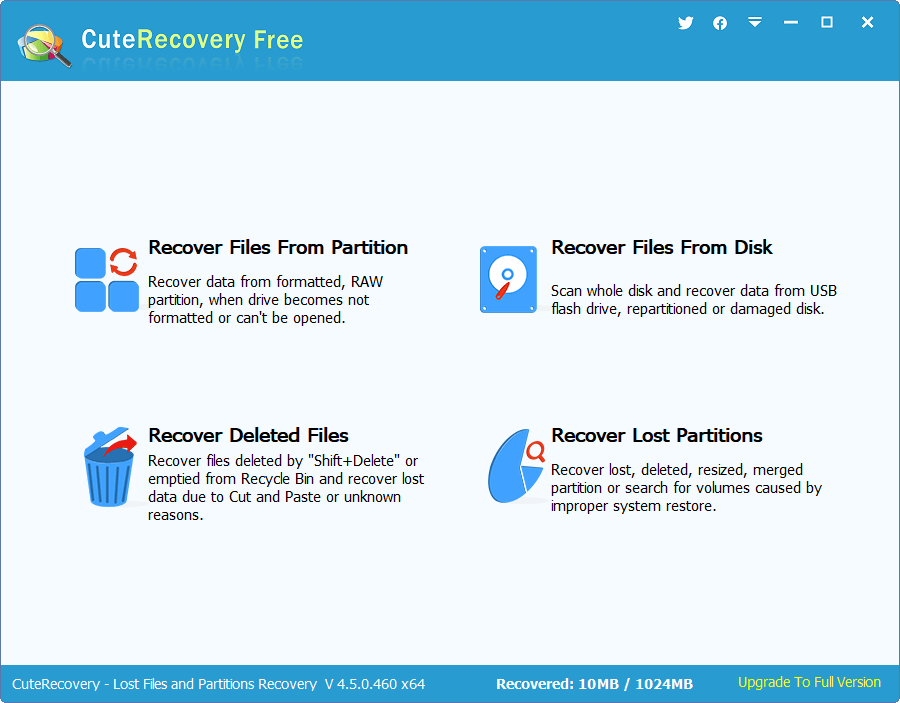
Step 2. Install and launch CuteRecovery from a different drive if possible. Then select a recovery feature based on the cause of data loss.
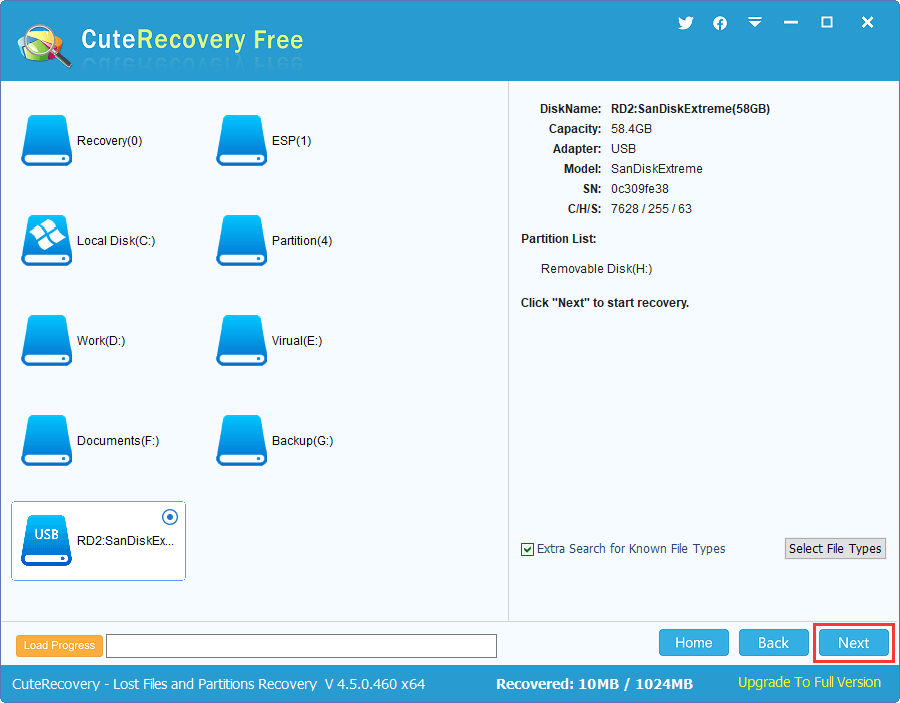
Step 3. Select the affected hard drive or partition and begin the scan.
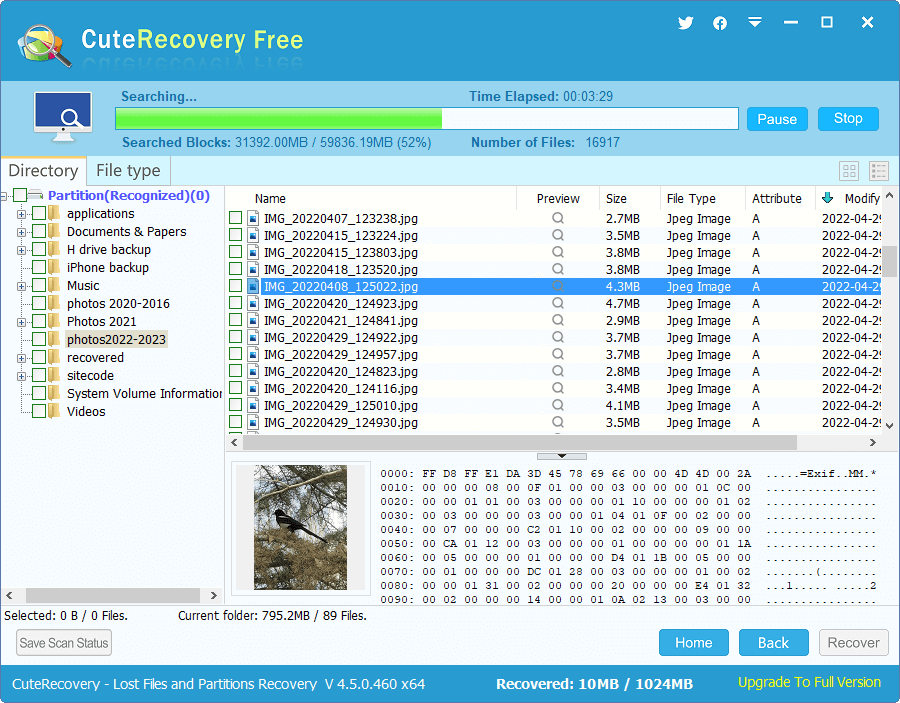
Wait for the scan results and preview recoverable files. This step matters more than people expect. It helps you separate real recovery opportunities from junk results.
Step 4. Recover lost files to a different storage location. Not the same drive. Not the same partition. A different destination, always.
Recuva has been around for a long time, and it still has a place. Its official positioning remains focused on recovering deleted files, and that is exactly where it feels most natural. If the problem is straightforward, maybe a file was deleted accidentally, maybe the Recycle Bin was emptied, maybe a memory card lost a few items, Recuva is still one of the easiest tools to try first.
This tool works best when the data loss is recent and the storage structure is still healthy enough that a lighter tool can do the job. Once things get messier, say unallocated space, RAW partitions, or heavier file system damage, other tools usually make more sense.
Pros
Cons
Bottom line
Because a lot of users do not need a full recovery workstation. They just need an undelete tool that is quick, familiar, and low pressure. Recuva remains one of the best options for recently deleted files, especially for basic Windows recovery needs.

TestDisk is an open source recovery tool designed for serious partition related problems, and the official project still presents it that way. If you have lost a partition, have a damaged partition table, or need to recover from strange hard disk partition behavior, TestDisk deserves attention.
This is where things split a bit between ordinary users and technical users. TestDisk can be powerful in the right hands, but it does not hold your hand much. The interface is plain, more utilitarian than friendly, and that alone will push many people toward commercial software with graphical workflows.
Pros
Cons
Bottom line
Because some hard drive recovery jobs are not about files first. They are about getting the partition back. If your main task is recovering lost partitions rather than a few deleted files, TestDisk is one of the best tools you can try.

PhotoRec comes from the same CGSecurity project as TestDisk, but it serves a different purpose. It can recover files by scanning the raw storage for file signatures rather than depending entirely on an intact file system. That is a big deal when the file system has been badly damaged.
So PhotoRec is often excellent for getting content back, especially media files and documents, but not always ideal when you want a neat, familiar directory tree waiting for you at the end. It is one of those tools you appreciate most when the situation has already gone sideways.
Pros
Cons
Bottom line
Because sometimes the question is not “can I restore the original structure” but simply “can I get my data back at all.” PhotoRec is one of the best last line open source recovery tools for serious logical damage and file carving scenarios.
R-Studio has long had a reputation as a serious recovery environment, and the official product description still acknowledges that it was originally developed for experienced data recovery professionals before being redesigned to be more scalable and user friendly. That background shows. It is powerful, flexible, and more comfortable in advanced hands than in casual ones.
This is a strong option when you need deeper recovery capabilities and are not afraid of a more technical workflow. It is often considered for complicated storage situations, advanced file system work, and professional style recovery tasks. That does not mean ordinary users cannot use it. They can. It just means R-Studio asks more from the user than beginner oriented tools do. In exchange, it offers more control.
Pros
Cons
Bottom line
If you are an advanced user, technician, or simply comfortable with more technical software, R-Studio is one of the strongest professional grade choices on this list.

Stellar Data Recovery sits in that middle ground many users like. It is commercial, polished, widely recognized, and generally built for people who want a guided recovery experience without having to think too hard about disk internals. It emphasizes ease of use and broad file recovery support, with a free version that can recover up to 1 GB of data.
If you want a clean interface and a more mainstream software experience, Stellar makes sense. It is usually a better fit for home users and office users than for people who want lots of storage level tools. That is not a criticism. It is a design choice.
Pros
Cons
Bottom line
Because usability matters. Not every recovery session should feel like a lab exercise. Stellar Data Recovery is a solid choice for users who value a clean experience and want straightforward recovery without too much technical overhead.

Recoverit has become one of the most recognizable names in consumer recovery software, and the official site continues to frame it as a comprehensive, approachable data recovery tool for Windows and Mac, with preview support across many file types. That combination of friendly design and broad mainstream visibility makes it a natural beginner pick. The workflow is clear, the scan presentation is beginner friendly, and the overall experience is less intimidating than more technical tools.
Pros
Cons
Bottom line
Because the best beginner software should lower stress, not add to it. Recoverit is one of the best hard drive recovery tools for beginners who want a smooth, guided experience.

Disk Drill is another polished, consumer friendly recovery tool that has grown beyond simple undelete use. CleverFiles currently describes it as a versatile data recovery solution that can handle deleted files, formatted drives, corrupted partitions, and more on recent Windows systems.
It generally feels modern, easy to navigate, and less technical than tools built with professionals in mind. That makes it attractive to users who want something more capable than a lightweight undelete utility but still do not want to dive into a complex recovery environment.
Pros
Cons
Bottom line
It is more capable than basic recovery apps, but still easy to approach. Disk Drill is a strong alternative for users who want a modern, user friendly recovery tool with decent breadth.

EaseUS Data Recovery Wizard remains one of the most visible names in this category. Its own current pages continue to emphasize a guided, wizard style workflow, support for deleted file recovery and formatted recovery, and free recovery up to 2 GB in the free edition.
For many users, the biggest advantage is clarity. The program walks you through the process in a way that feels approachable even if you have never used recovery software before. The downside is predictable. Once you move beyond the free allowance or want broader premium features, the paid version becomes part of the equation pretty quickly.
Pros
Cons
Bottom line
Because some users simply recover better when the software makes the path obvious. EaseUS Data Recovery Wizard is a strong fit for users who want a guided recovery experience with a low learning curve.
There are a lot of data recovery lists online that blur together after a while. Too much recycled praise. Too many vague claims. So for this article, the tools were compared using criteria that actually matter when somebody is staring at a missing partition or a dead looking drive in Disk Management.
We looked at the kinds of data loss each tool is built for, how approachable the interface feels, whether the free version is meaningfully useful, whether preview is available, and how well each product covers more serious hard drive scenarios such as formatted partitions, RAW volumes, and lost partition recovery. We also considered whether the software is narrowly focused on file recovery or offers broader disk and partition capabilities. That distinction is bigger than it sounds.
One note, though. No software can promise perfect recovery in every case. If data has already been overwritten, or if the drive has physical damage, even the best program may fail. Recovery software is strongest in logical data loss scenarios, not in every disaster story.
This is where a lot of users get misled. Free hard drive recovery software can mean several different things.
Sometimes it means the software is fully free and open source, and sometimes it means there is a genuinely usable free edition with meaningful recovery value, which is where CuteRecovery Free stands out. In other cases, it means the software is free to install, free to scan, free to preview, but full recovery is limited by a data cap or premium features. That is the model used by several commercial tools on this list.
Paid recovery software is not automatically better. But it often gives you more room to work with. Better preview support, fewer recovery limits, more file system coverage, more refined interfaces, and in some cases extra tools such as RAID data recovery, disk imaging, bootable recovery media, or partition management. If your lost data is valuable, or the recovery case is more than a simple accidental deletion, paying for a stronger tool can be the sensible move.
Still, free tools have a real place. For basic mistakes, light recovery jobs, or initial scans, they are often enough. You just want to be clear on what “free” actually buys you before you sink time into a scan.
Start with the data loss scenario, not the brand name.
If the problem is simple deletion, a lighter tool like CuteRecovery may be enough.
If the drive is RAW, unallocated, or missing a partition, you want software that is stronger at partition and structure level recovery. That is where DiskGenius starts to look more attractive.
If you are not technical and just want a calm, guided workflow, and you want real free value, CuteRecovery Free is a better first stop than many free trial products.
It is also smart to look for preview support before recovery, especially if the data matters. Preview does not guarantee success, but it does help you judge whether the recovered files are likely to be usable.
And one more thing. Do not install the recovery program onto the same hard drive partition where the lost data was located if you can avoid it. New writes may overwrite exactly the sectors you are trying to recover.
Often, yes. But “damaged” is doing a lot of work in that sentence. Software recovery is powerful, but it is not magic.
If the drive is logically damaged, maybe the partition is RAW, the file system is corrupted, the partition was deleted, or the hard drive is inaccessible because of software level issues, recovery software can absolutely help. In those cases, HDD recovery software may still recover data, depending on how much of the original information remains intact and whether anything has been overwritten.
If the drive is physically damaged, the story changes. Clicking sounds, grinding noises, a drive that does not spin properly, a disk not detected in BIOS, repeated disconnects caused by hardware failure, or obvious electrical damage are not normal software recovery situations. In those cases, continued scanning may make things worse. A professional recovery lab may be the safer option.
Read more:
A FREE External Hard Drive Repair Tool for External HDD Repair
1. What is the best hard drive recovery software in 2026?
For the average user, DiskGenius stands out as the top choice for hard drive recovery software in 2026. It excels at recovering deleted files, formatted partitions, and RAW drives, as well as lost partitions. Beyond that, it provides partition management, backup, and cloning capabilities.
2. Is using free software to recover data from a hard drive safe?
Free recovery software can be safe, but you should only get it from official or trusted sources.
3. Can I recover data from a formatted hard drive?
A quick format usually removes file system references rather than immediately erasing every sector. Many recovery tools on this list support for formatted drive recovery. The sooner you stop using the drive, the better your odds.
4. Which tool is best for lost partition recovery?
For lost partition recovery, DiskGenius is a very strong option if you want a graphical Windows tool that combines partition recovery with broader disk management and data recovery features.
5. Can recovery software fix a physically damaged hard drive?
Usually not. Recovery software is best for logical data loss. If the drive is making clicking noises, failing to spin correctly, or disappearing because of hardware failure, software alone may not solve it. In those cases, professional recovery service is often the safer route.
DiskGenius - An advanced hard disk recovery program to unformat & undelete files/partitions from HDDs, memory cards, and USB disks.
ô Free Download

 Facebook
 YouTube
 X
X